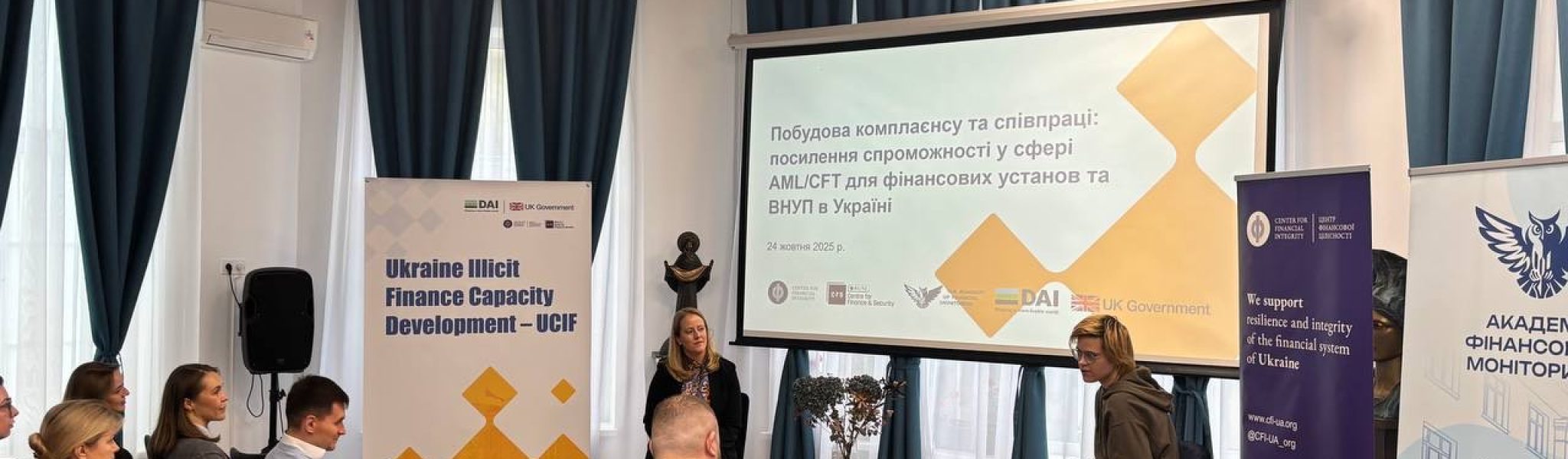
Building Сompliance and Сooperation: Srengthening the Capacity of FIs and DNFBPs in Ukraine in the Field of AML/CFT
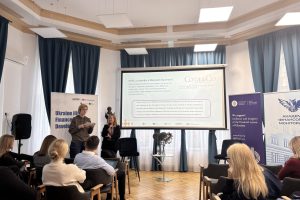
The seminar, held on 24 October 2025, aimed to raise awareness among FIs and DNFBPs that may be vulnerable to money laundering risks. The event helped participants better understand their role in preventing financial crimes and how to effectively implement FATF international standards in their daily practice.
About the Event
The training was organised by the Center for Financial Integrity in cooperation with the Centre for Finance and Security (CFS) at RUSI, as part of the Ukraine—Illicit Finance Capacity Development Project. The programme is implemented jointly with DAI Global with support from the Foreign, Commonwealth & Development Office (FCDO).
Olivia Allison, the event’s speaker, is a senior financial investigator and researcher, and an expert in sanctions, anti-corruption, compliance, and corporate governance. She is a senior specialist on international projects related to combating illicit financial activities and investigating sanctions evasion by Russia. Olivia serves on the Advisory Board of the Centre for Financial Integrity and is an Associate Fellow at RUSI.
Who Are DNFBPs and Why Are They at Risk?
Designated Non-Financial Businesses and Professions (DNFBPs) are non-financial sector entities which, according to FATF standards and national legislation, are classified as “reporting entities” and are therefore required to comply with Anti-Money Laundering and Counter-Terrorist Financing (AML/CFT) obligations.
DNFBPs include:
Casinos;
Real estate agents;
Dealers in precious metals and stones;
Lawyers, notaries, other independent legal professionals and accountants;
Trust and company service providers.
Although these entities are not banks, they have access to significant financial transactions on behalf of their clients. This means they can — knowingly or unknowingly — facilitate the concealment of illicit funds. For this reason, FATF identifies them as the “gatekeepers” of the financial system.
FATF Recommendations
The Financial Action Task Force (FATF) is an international body that sets global standards for combating money laundering, terrorist financing, and the financing of weapons of mass destruction.
FATF has developed 40 Recommendations grouped into seven key areas:
AML/CFT policies and coordination;
Money laundering and confiscation;
Terrorist financing and proliferation financing;
Preventive measures;
Transparency and beneficial ownership;
Powers and responsibilities of competent authorities;
International cooperation.
At the heart of these standards lies the risk-based approach, which requires countries and institutions to understand their own risks and allocate resources effectively to mitigate them.
Red Flags for Notaries
Like other DNFBPs, notaries can be exposed to money laundering schemes, as they frequently participate in financial or corporate transactions on behalf of clients. Therefore, it is crucial to recognise “red flags” — indicators that may suggest suspicious activity.
These include situations where clients act cautiously, obstructively, or with excessive secrecy; are not the true initiators of transactions; or when corporate clients cannot be found online.
Other warning signs include the use of free email accounts, clients with unusual knowledge of AML/CFT systems, remote locations without clear justification, complex corporate structures without logical purpose, unusual requests from long-term clients, or transactions lacking economic rationale. Additional red flags include offers of unusually high fees or pressure on the notary to relax identification procedures or accept questionable verification documents.
Recognising and understanding such red flags helps notaries detect risks early and avoid involvement in illicit schemes.